
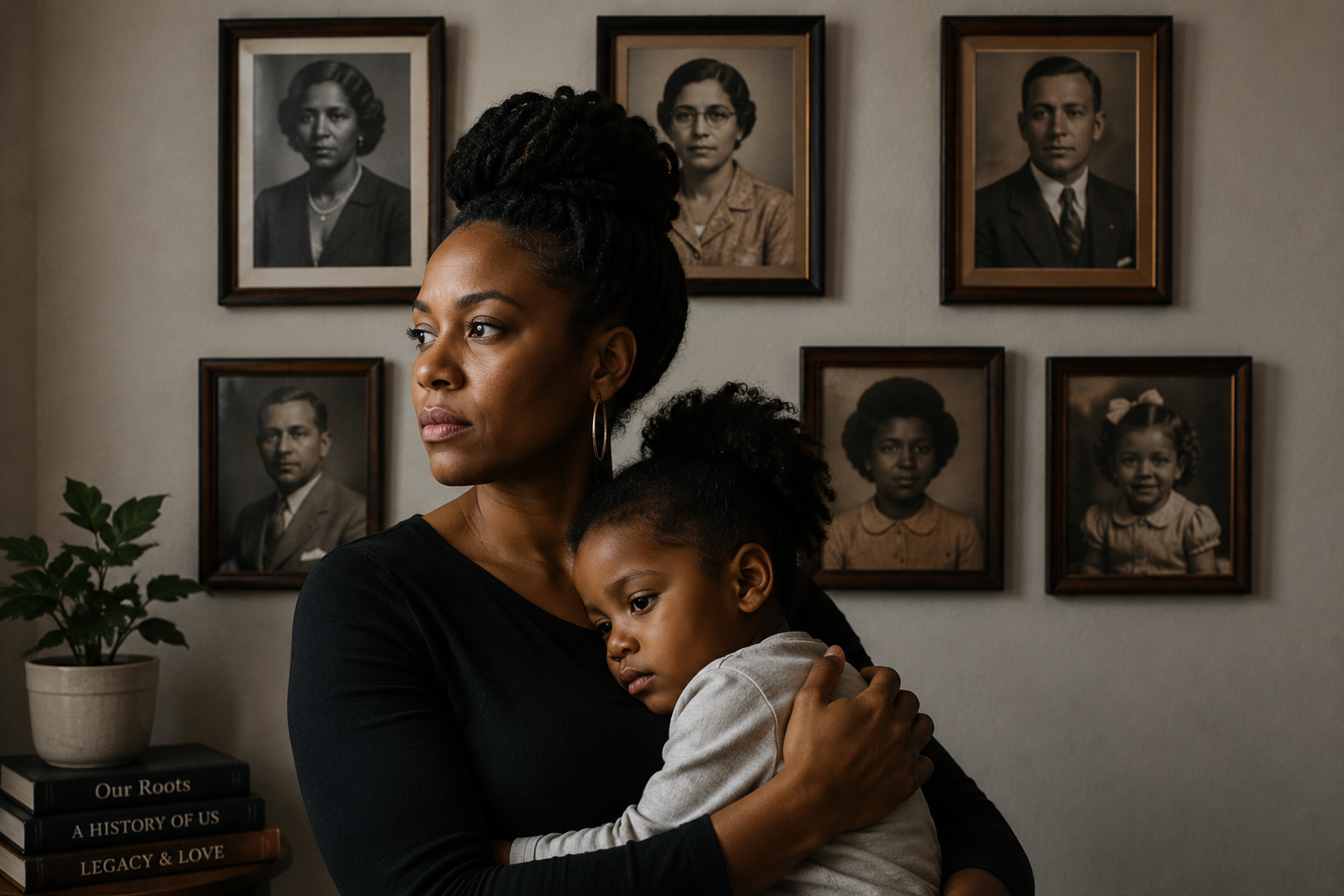

Some of the most powerful wounds that shape our lives are the ones we never realized we were carrying. Many people grow up accepting chaos as normal, repeating unhealthy patterns without questioning where they came from, or struggling in relationships without understanding why.
That confusion often has a name: generational trauma. And for millions of people, recognizing it is the first step toward healing.
This article explores what generational trauma is, the forms it takes, how it affects mental health and relationships, and what it truly means to break the cycle.
What Is Generational Trauma?
Generational trauma is emotional, psychological, and behavioral pain passed down through families and communities over time. It shapes how people think, communicate, trust others, manage emotions, and respond to stress.
Left unaddressed, these patterns tend to repeat. A child raised in emotional chaos may carry that chaos into adulthood and, without awareness, pass it on to the next generation.
Research has explored how trauma affects future generations through chronic stress responses, learned survival behaviors, and environmental conditioning. Understanding generational trauma is not about assigning blame. It is about recognizing inherited patterns so you can choose differently.
Types of Generational Trauma
Generational trauma shows up differently depending on a person’s family history, environment, and lived experiences. The three most common forms are intergenerational trauma, transgenerational trauma, and community trauma. These categories often overlap, and many people carry more than one.
Intergenerational Trauma
Intergenerational trauma is passed directly from parent to child through behaviors, parenting styles, and emotional patterns. Children absorb how the adults around them communicate, handle conflict, express love, and respond to stress, even when those lessons are never spoken aloud.
When unhealthy behaviors are normalized within a home, children often carry them into adulthood without realizing the origin. A parent who grew up where emotions were dismissed may struggle to offer emotional support to their own children. Someone raised with harsh criticism may unconsciously repeat those same patterns later in life.
Common examples include:
- Emotional neglect or unavailability
- Physical, emotional, or verbal abuse
- Fear-based parenting
- Addiction within the household
- Cycles of abandonment or instability
- Exposure to domestic violence
- Chronic stress or unresolved anger
- Poor communication and emotional suppression
Transgenerational Trauma
Transgenerational trauma spans beyond a single family line. It is rooted in large-scale historical or collective experiences such as slavery, war, forced displacement, colonization, or systemic oppression. The psychological effects of these events can persist across generations, even when the original trauma occurred long before someone was born.
People may carry fears, survival instincts, or emotional wounds they cannot fully explain because no one in their family ever openly discussed or healed from the source.
Common examples include:
- Families affected by slavery or systemic racism
- Generations shaped by war, violence, or genocide
- Trauma connected to immigration or forced displacement
- Multigenerational poverty and lack of access to resources
- Survival-based mindsets rooted in collective fear or instability
- Emotional suppression passed down through cultural expectations
- Distrust rooted in historical betrayal or oppression
Community Trauma
Trauma does not only live inside homes. The environments people grow up in leave lasting marks. Communities shaped by violence, poverty, addiction, discrimination, or chronic instability can create conditions where survival becomes a constant state of mind rather than a temporary response to danger.
Children raised in these environments often become hypervigilant early in life. They may struggle to feel safe, trust others, regulate emotions, or allow vulnerability, because their nervous systems were trained to stay on high alert.
When harmful behaviors become commonplace in a neighborhood or school, they stop being questioned. That normalization is one reason community trauma is so difficult to recognize and heal from.
Common examples include:
- Exposure to neighborhood violence or high crime
- Poverty and food or housing insecurity
- Substance abuse within communities
- Discrimination and systemic inequality
- Lack of mental health support or resources
- Generational incarceration
- Schools and environments where emotional struggles go unsupported
How Generational Trauma Affects Mental Health and Relationships
Generational trauma rarely announces itself clearly. More often, it surfaces through anxiety, emotional numbness, chronic people-pleasing, difficulty trusting others, or patterns of unstable relationships. Many people spend years managing symptoms without ever connecting them to the deeper root.
Some of the most common signs include:
- Difficulty regulating emotions or expressing feelings in healthy ways
- Repeating the same relationship dynamics despite wanting something different
- Fear of abandonment, rejection, or vulnerability
- Survival-mode thinking — always waiting for something to go wrong
- Self-worth tied to performance, approval, or being needed
- Shutting down emotionally under stress
- Struggles with setting or maintaining healthy boundaries
These patterns are not personal failures. They are learned responses to environments that required them.
How to Begin Healing Generational Trauma
Healing generational trauma does not happen overnight. It takes time, patience, and consistent effort. What works for one person may not work for another, and that is okay. There is no set timeline for healing. But regardless of the path, it consistently begins in the same place: awareness.
Build Self-Awareness
Many people repeat patterns simply because they have never been asked to examine them. Start by noticing your emotional triggers, your default responses to stress, and the relationship behaviors you have normalized. Reflection is the foundation of change.
Seek Therapy or Professional Support
Therapy provides a structured, safe space to process old wounds, understand the roots of your patterns, and develop healthier coping skills. Modalities like trauma-informed therapy, EMDR, and somatic approaches are particularly effective for deep-rooted trauma.
Set and Maintain Healthy Boundaries
Healing often requires creating distance from environments or relationships that reinforce the cycles you are trying to break. Boundaries are not walls. They are decisions about what you will and will not accept in order to protect your emotional well-being.
Learn to Feel and Express Emotions
Emotional suppression is one of generational trauma’s most common legacies. Part of healing is learning to identify, name, and express emotions in healthy ways, without shame, without shutting down, and without letting those emotions control you.
Replace Learned Behaviors With Intentional Habits
Breaking cycles means actively unlearning what no longer serves you. That might look like communicating differently in conflict, choosing rest over hypervigilance, or asking for help instead of isolating. Small consistent changes accumulate into lasting transformation.
Build Relationships That Feel Safe
Healing is harder in isolation. Surrounding yourself with people who model healthy communication, mutual respect, and emotional safety creates the environment where growth becomes possible.
Live With Intention
Perhaps the most powerful act of healing is deciding what kind of life you want to build, and making choices that reflect that vision rather than old survival habits. Intentional living means prioritizing your mental health, your peace, and your growth, even when old patterns pull in the opposite direction.
Final Thoughts
Generational trauma is not always visible. Often, it hides in plain sight: in the way you react to conflict, the relationships you keep choosing, the fears that follow you, the silence around things that should be spoken.
Many people spend their lives carrying pain they never understood because no one around them ever questioned the patterns either. But healing becomes possible the moment you begin to see those patterns for what they are.
Breaking the cycle is not about becoming perfect or erasing your past. However, it is about choosing, again and again, to respond to life from a place of awareness rather than inherited pain.
The trauma may not have started with you. But your healing can. And sometimes, one person choosing to heal is enough to change the direction of an entire generation.
If this article resonated with you, take a moment to reflect on the emotional patterns, survival behaviors, or relationship cycles that may be shaping your life. Awareness is where healing begins.
Subscribe below to receive free healing and self-reflection prompts designed to support emotional growth, self-awareness, and intentional change.

